ALE-G
English
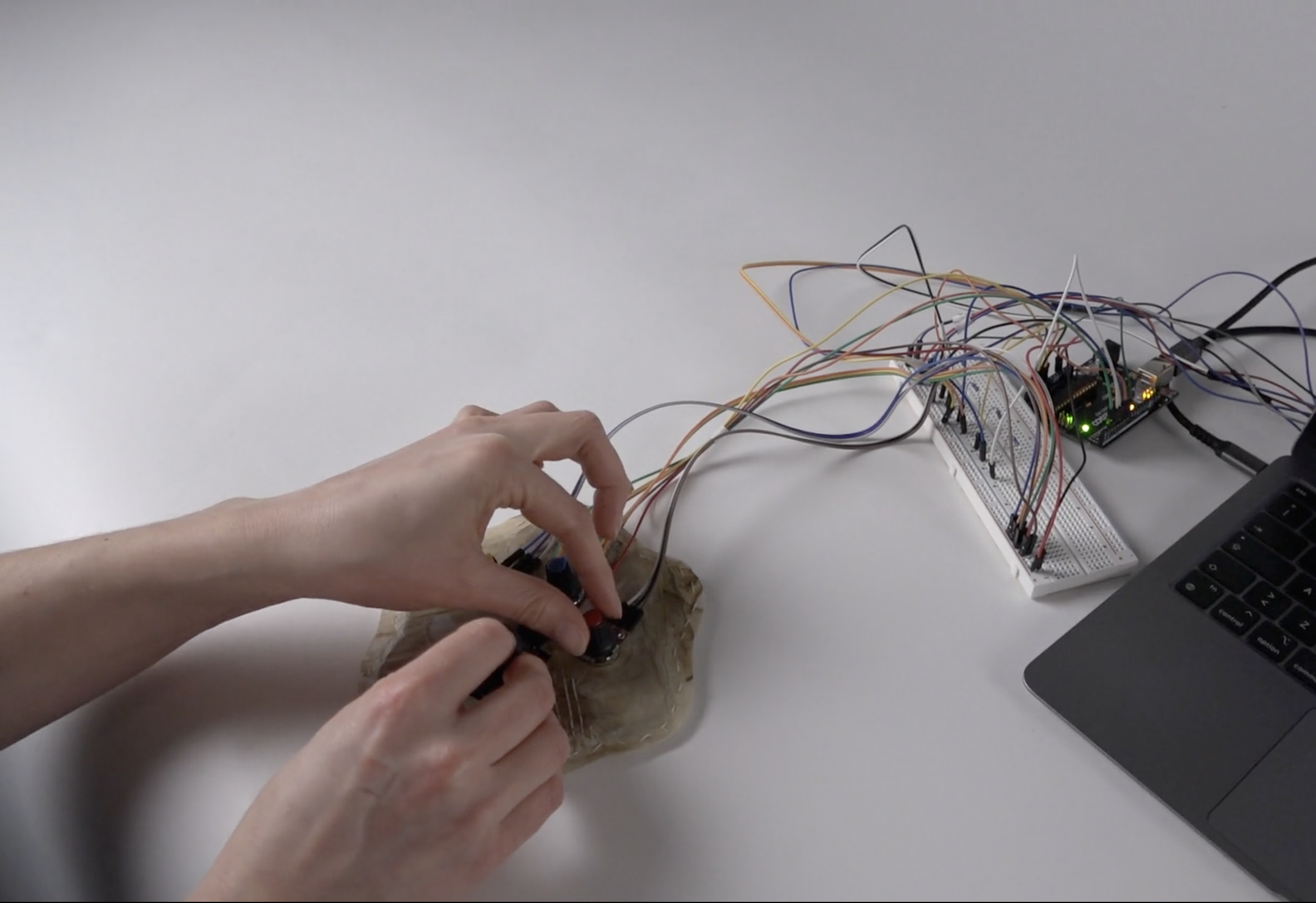
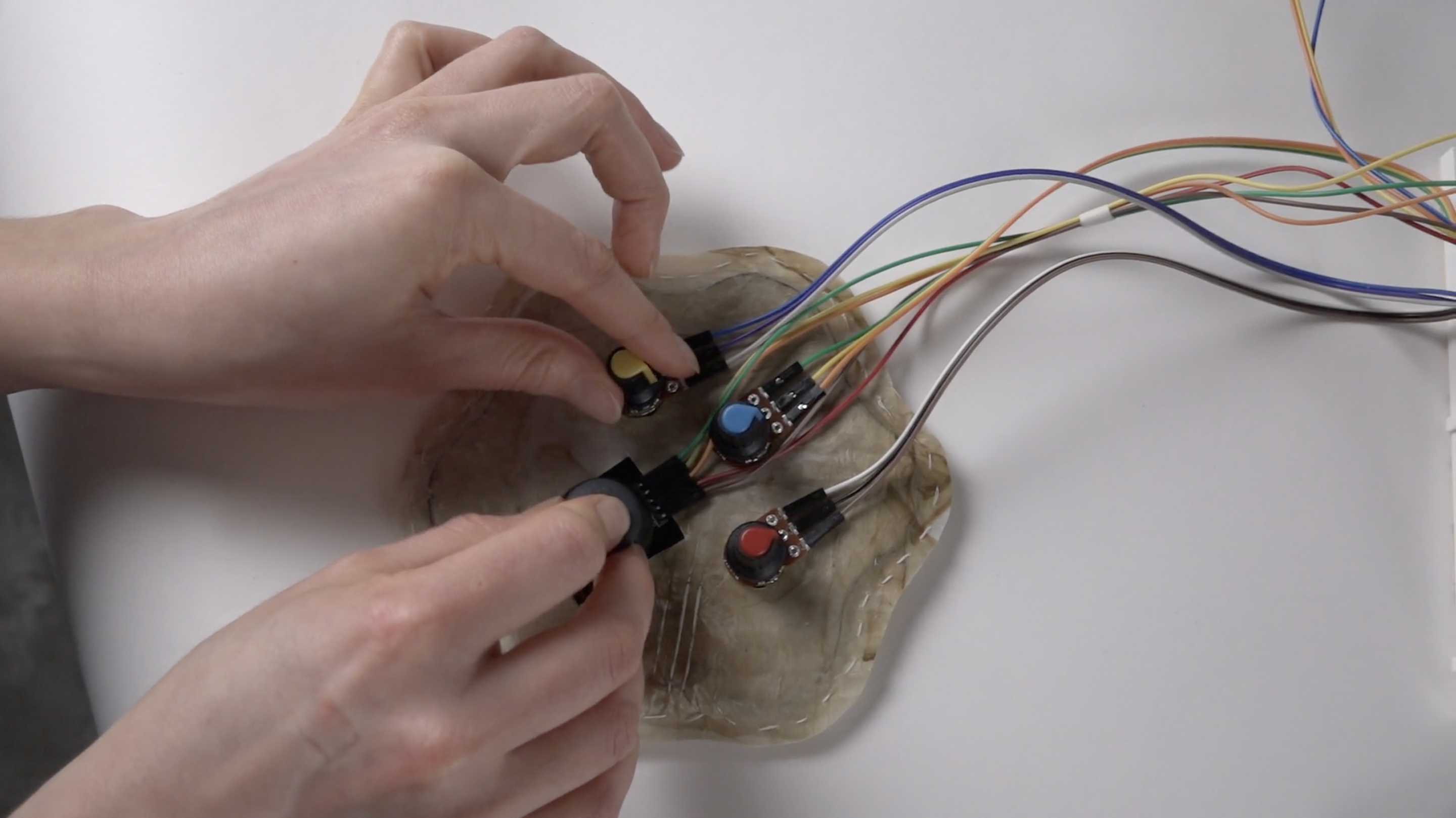
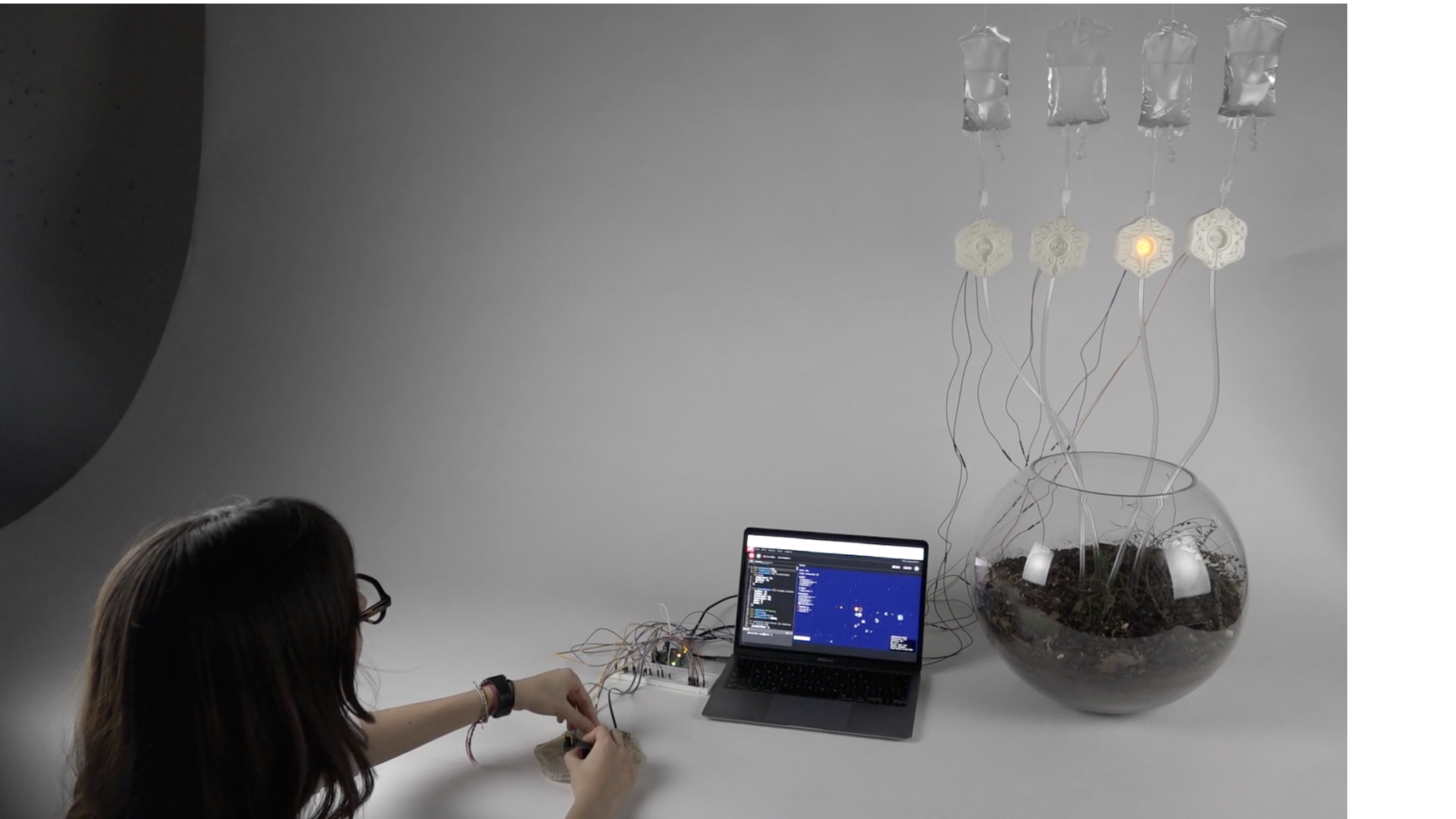
ALE-G is an artificial life ecosystem game that invites players to spend one minute inside a digital terrarium, and then live with the consequences of their choices. Inspired by Game of Life, Lenia, Undertale and other works that question player's ethical choices and blur the line between play and system thinking, the game simulates a living terrarium with twelve common species across plants, bacteria, fungi, and insects. Temperature, humidity, and pH shift in response to player actions, affecting the creature's metabolism, movement, and reproduction. An integrated recovery time equation based on real forest ecosystem data calculates how long the ecosystem takes to return to balance, revealing the weight of human intervention on a small scale that mirrors the planetary one. ALE-G is built in p5.js as open-source code, and was accompanied by a biohybrid controller built with arduino components and a bacterial cellulose cover, making the act of playing physically entangled with living matter. Rather than rewarding victory, the game asks: what does it mean to test, probe, and manipulate the more-than-human out of curiosity? And can we learn to interact without disconnecting?
Español
ALE-G es un juego de ecosistema de vida artificial que invita a los jugadores a pasar un minuto dentro de un terrario digital y luego vivir con las consecuencias de sus decisiones. Inspirado en Game of Life, Lenia, Undertale y otros trabajos que cuestionan las decisiones éticas del jugador y difuminan la línea entre el juego y el pensamiento sistémico, el juego simula un terrario vivo con doce especies comunes de plantas, bacterias, hongos e insectos. La temperatura, la humedad y el pH cambian según las acciones del jugador, afectando el metabolismo, el movimiento y la reproducción de las criaturas. Una ecuación integrada de tiempo de recuperación, basada en datos reales de ecosistemas forestales, calcula cuánto tarda el ecosistema en volver al equilibrio, revelando el peso de la intervención humana a pequeña escala como reflejo de la planetaria. ALE-G está construido en p5.js como código abierto, y fue acompañado por un controlador biohíbrido construido con componentes de Arduino y una cubierta de celulosa bacteriana, haciendo que el acto de jugar quede físicamente entrelazado con materia viva. En lugar de premiar la victoria, el juego pregunta: ¿qué significa probar, sondear y manipular lo más-que-humano por curiosidad? ¿Y podemos aprender a interactuar sin desconectarnos?