Kilim Letters
English
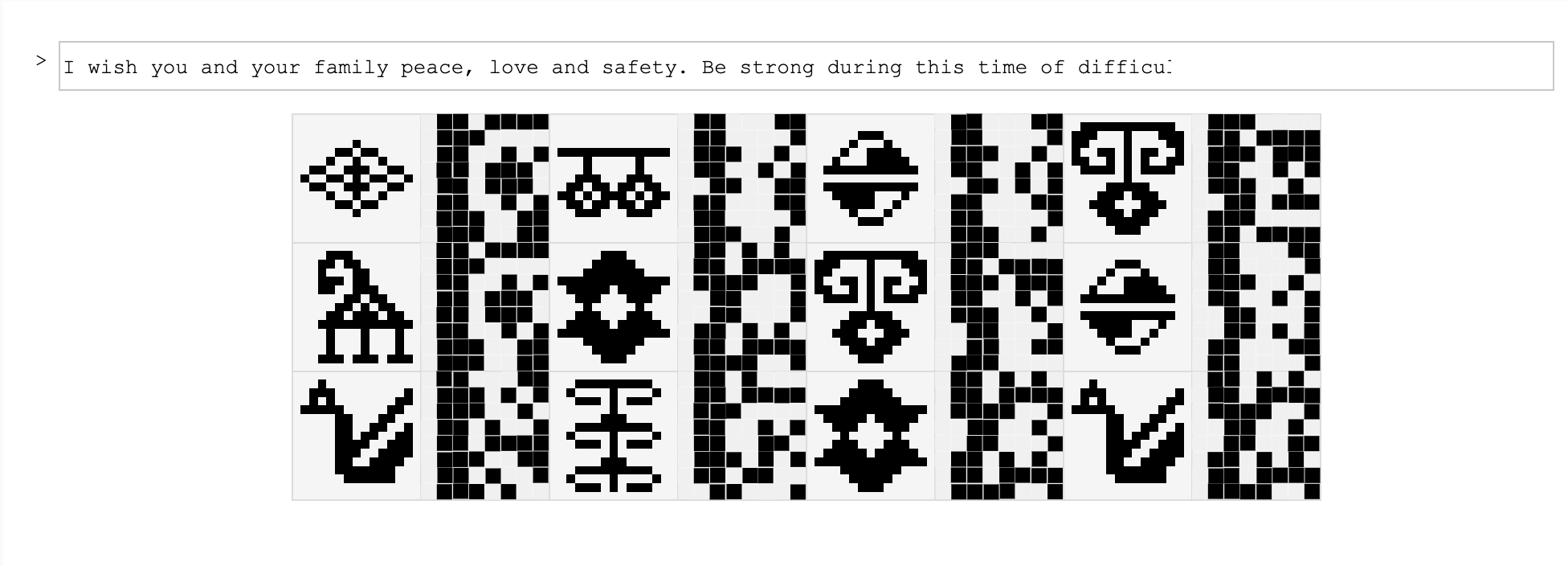
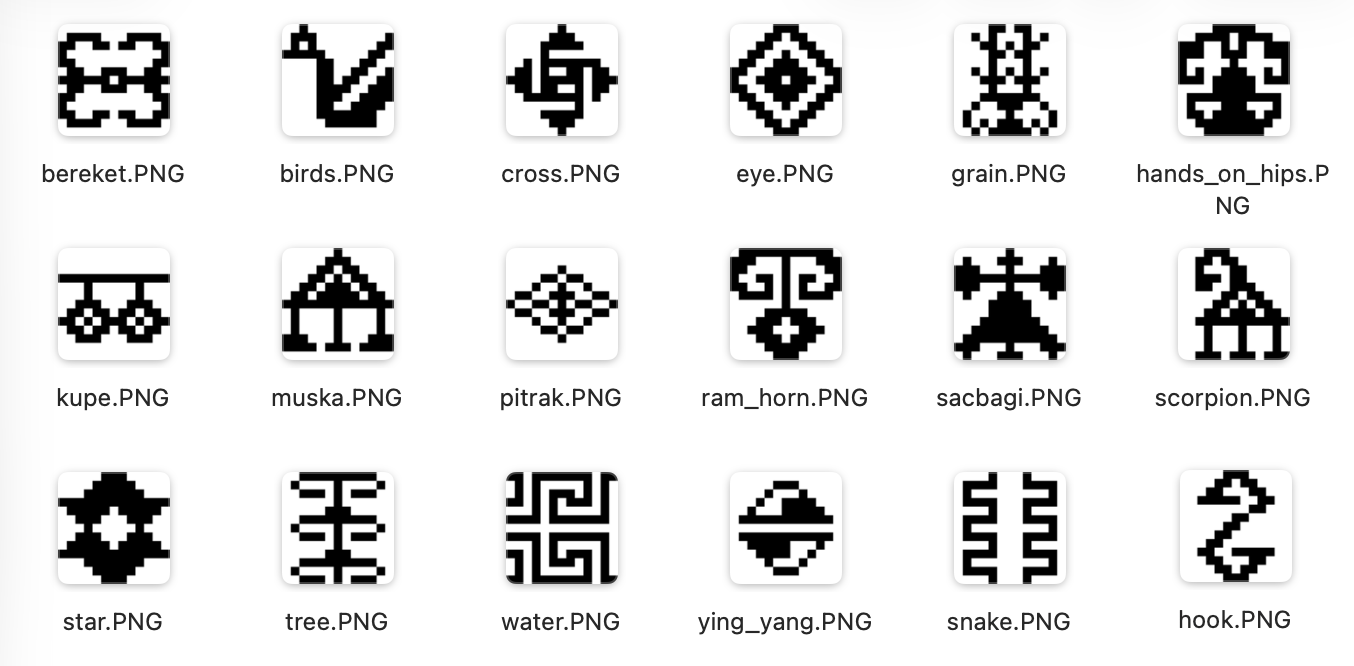
Kilim Letters translates emotions into woven patterns. The term kilim is associated with a tapestry-woven cover, hanging, or rug used throughout the Middle East (Mallett 1998, 72). Historically, "tribal kilims have been undervalued and underappreciated, with conservation costs often exceeding their perceived monetary value" (Zaret, 2014). Yet there is a long history of weaving among the nomadic tribes and village dwellers of Anatolia, where looms set up in or near the home were an integral part of domestic life and predominantly women's work (Barber 1994). As conserving kilims becomes less popular and more difficult, I wondered how this art could survive in today's age. Looking at the motifs, I was inspired by their meanings: wishes of abundance, messages of resilience and bravery, hopes for marriage. I don't know how to weave it, but I can try to code it. So I asked myself: what if I could write a letter to someone using these motifs? Using Kilim Letters, you can write a message filled with feelings, wishes, or hopes for someone else. The program detects the emotions in your words and matches them with traditional Anatolian kilim motifs, each carrying a specific meaning: protection, joy, abundance, eternity, love. The result is a unique digital weaving pattern that carries the symbolism of ancient Anatolian culture, turning a letter into a textile of emotions you can send anywhere.
Español
Kilim Letters traduce emociones en patrones tejidos. El término kilim se asocia a un tapiz, cubierta o alfombra de tejido de tapicería utilizado en todo Oriente Medio (Mallett 1998, 72). Históricamente, "los kilims tribales han sido infravalorados y poco apreciados, y a menudo los costos de conservación superan su valor monetario percibido" (traducido de Zaret, 2014). Sin embargo, existe una larga tradición textil entre las tribus nómadas y los habitantes de las aldeas de Anatolia, donde los telares instalados dentro o cerca del hogar eran parte integral de la vida doméstica y predominantemente trabajo de mujeres (Barber 1994). Dado que conservar los kilims se vuelve menos popular y más difícil, me pregunté cómo podría sobrevivir este arte en la actualidad. Al observar los motivos, me inspiraron sus significados: deseos de abundancia, mensajes de resiliencia y valentía, anhelos de matrimonio. No sé tejerlos, pero puedo intentar programarlos. Así que me pregunté: ¿y si pudiera escribir una carta a alguien usando estos motivos? Usando Kilim Letters, puedes escribir un mensaje lleno de sentimientos, buenos deseos o esperanzas para otra persona. El programa detecta las emociones en tus palabras y las empareja con motivos tradicionales del kilim de Anatolia, cada uno con un significado específico: protección, alegría, abundancia, eternidad, amor. El resultado es un patrón de tejido digital único que porta el simbolismo de la antigua cultura de Anatolia, convirtiendo una carta en un textil de emociones que puedes enviar a cualquier lugar.
Write your Kilim Letter
References
- Akman, Ö. and Bayraktar, Y., (2024). Meanings Attributed to Rugs in Turkish Culture. In: V. Akerson, O. Akman and M.L. Ciddi, eds., Proceedings of IConSES 2024 – International Conference on Social and Education Sciences. Chicago, IL, USA: ISTES, pp. 174–196.
- Barber, E. J. W., and Rogers D. Spotswood Collection. 1994. Women's work: The first 20,000 years: women, cloth, and society in early times. New York: Norton.
- GÜRTAŞ, S. (2016). READING VISUAL SYMBOLS ON ANATOLIAN KILIMS. Art-Sanat Journal/Art-Sanat.
- Kilim.com by Kilim Studio, (2008). Kilim Motifs and Symbols. [online] Available at: https://www.kilim.com/kilim-wiki/kilim-motifs [Accessed 25 February 2026].
- Mallett, M. (1998). Woven structures: A guide to oriental rug and textile analysis. Atlanta, GA: Christopher Publications.
- Mellaart, J., (1980). Turkish Kilims. Anatolian Studies, 30, pp. 91–99.
- Mellaart, J. (1984). Anatolian Kilims; New Insights and Problems. Anatolian Studies, 34, 87-95.
- Zaret, C., (2014). A Turkish Kilim: Analysis, Stabilization and Loss Compensation. In: AIC, p. 77.